Legacy System Modernization: The Engineer's Honest Guide
Rashad Cureton
Founder, Cure Consulting Group
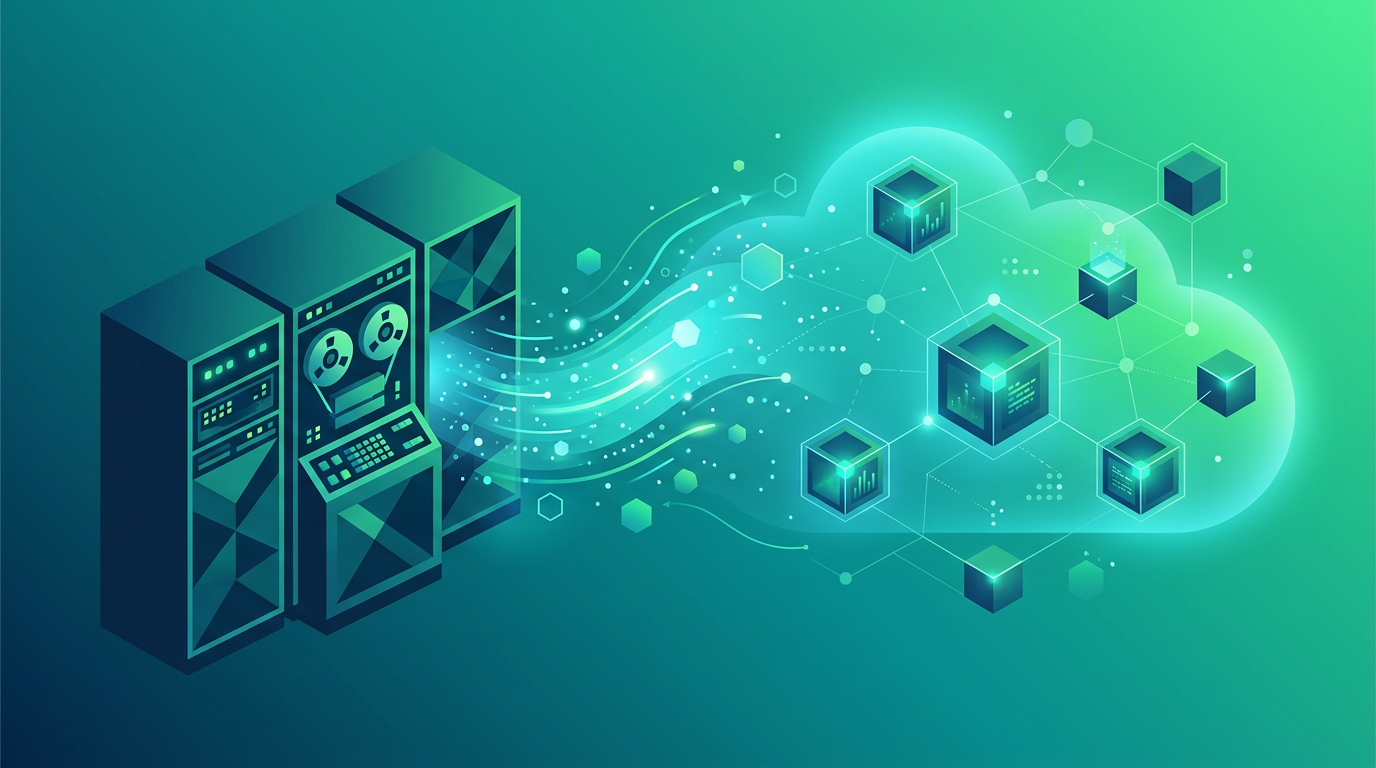
The Big-Bang Rewrite Is Almost Always Wrong
I've seen it dozens of times. A company has a system that's 8-15 years old, running on outdated technology, and someone in leadership says: "Let's just rebuild it from scratch."
Eighteen months and $2M later, the new system handles 60% of what the old one did, the team is exhausted, and the business is running both systems in parallel.
Big-bang rewrites fail because they underestimate the accumulated knowledge embedded in legacy code. Every weird edge case, every special calculation, every "why does it do that?" — those aren't bugs. They're business rules that took years to discover and encode.
Cloud Architecture
Big-bang rewrites fail because they underestimate the accumulated knowledge embedded in legacy code. Those weird edge cases aren't bugs — they're business rules that took years to discover and encode.
”The Strangler Fig Pattern
The approach that actually works borrows from nature. A strangler fig grows around an existing tree, gradually replacing it while the original tree continues to function.
Modernization Path
Get insights like this in your inbox
Practical tips on AI, mobile & cloud — no spam.
In software terms:
- Wrap the old system with a modern API layer
- Route new features through the modern system
- Migrate existing features one at a time, starting with the least risky
- Retire old components only after the new version is proven in production
This approach is slower on paper but faster in reality, because you never stop delivering value.
Before & After: What Modernization Actually Looks Like
Before
- Monolithic deployment — one change requires deploying everything
- 4-hour deploy windows, usually at 2 AM on weekends
- Single database with 200+ tables and no clear ownership
- Manual testing — 2 weeks per release cycle
- No monitoring — customers report outages before engineering knows
- One senior developer who "knows how it works" (single point of failure)
- $180K/year in maintenance costs for on-premise servers
After
- Independent services deployed on demand via CI/CD
- 15-minute deploys, multiple times per day, zero downtime
- Domain-specific databases with clear ownership and schemas
- Automated test suites — 90%+ coverage, runs in 12 minutes
- Real-time monitoring with alerting — mean time to detect under 3 minutes
- Documented architecture with onboarding guides for new engineers
- $4,200/month on cloud infrastructure with auto-scaling
Where to Start: The Risk-Value Matrix
Map every module of your legacy system on two axes:
- Business value: How critical is this to daily operations?
- Technical risk: How fragile, undocumented, or difficult to maintain is this?
| Low Risk | High Risk | |
|---|---|---|
| High Value | Modernize second | Plan carefully, migrate incrementally |
| Low Value | Leave it alone | Retire or replace it |
The Database Problem
Legacy databases are where migrations go to die. Here's the honest truth:
- Don't migrate the database first. Keep the old database and build new services that read from it while writing to both old and new.
- Use CDC (Change Data Capture) to keep databases in sync during the transition.
- Plan for a 6-12 month overlap where both databases are live.
Yes, this is messy. But it's less messy than a failed migration that corrupts production data.
When Legacy Isn't Actually the Problem
Sometimes the pain isn't the technology — it's the architecture. I've seen companies spend millions migrating from Java 8 to Java 17 when the real issue was a monolithic deployment pipeline.
Before you modernize the stack, ask:
- Could we fix the deployment process without changing the code?
- Is the real bottleneck the database schema, not the application code?
- Would better monitoring solve 80% of our operational pain?
Often, the answer is yes, and the fix is 10x cheaper than a migration.
Practical Modernization Checklist
- Inventory everything — services, databases, integrations, scheduled jobs
- Document the business rules — especially the undocumented ones
- Establish a testing baseline — you can't safely change what you can't test
- Build the modern API layer — even if it just proxies to the old system initially
- Migrate one feature — prove the pattern works end-to-end
- Repeat — expanding scope with each iteration
The Timeline Reality
For a mid-sized legacy system (50-100 endpoints, 5-10 database tables, 3-5 integrations):
- API wrapper phase: 4-6 weeks
- First feature migration: 3-4 weeks
- Full migration: 6-18 months, depending on complexity
- Database cutover: 2-4 weeks after the last feature migrates
These numbers assume a team of 2-3 experienced engineers working full-time. Smaller teams take longer. Larger teams often don't go faster (communication overhead).
Dealing with a legacy system that's holding your business back? Let's talk about a migration strategy that won't disrupt your operations.
Written by
Rashad Cureton
Founder & Principal Engineer
Rashad is the founder of Cure Consulting Group. Previously an engineer at JP Morgan, Ford, Clear, NYT, Kickstarter, and Big Nerd Ranch. He builds full-stack web and mobile apps for startups and companies of every size.
Related Articles
Mobile App Development: Native vs Cross-Platform in 2026
The native vs. cross-platform debate has shifted dramatically. KMP, Flutter, and React Native have all matured — but 'it depends' isn't useful advice. Here's a concrete decision matrix.
10 min
Why Your SaaS Platform Needs a Technical Architecture Review
Most SaaS platforms hit a wall between 1K and 10K users. The symptoms look like performance problems, but the root cause is almost always architecture. Here's how to spot the signs early.
9 min
Building Bilingual Apps: Our Approach to EN/ES Localization
Localization isn't just translating strings — it's rethinking your architecture, your UX, and your cultural assumptions. Here's how we build apps that feel native in both English and Spanish.
9 min