Why Your SaaS Platform Needs a Technical Architecture Review
Rashad Cureton
Founder, Cure Consulting Group
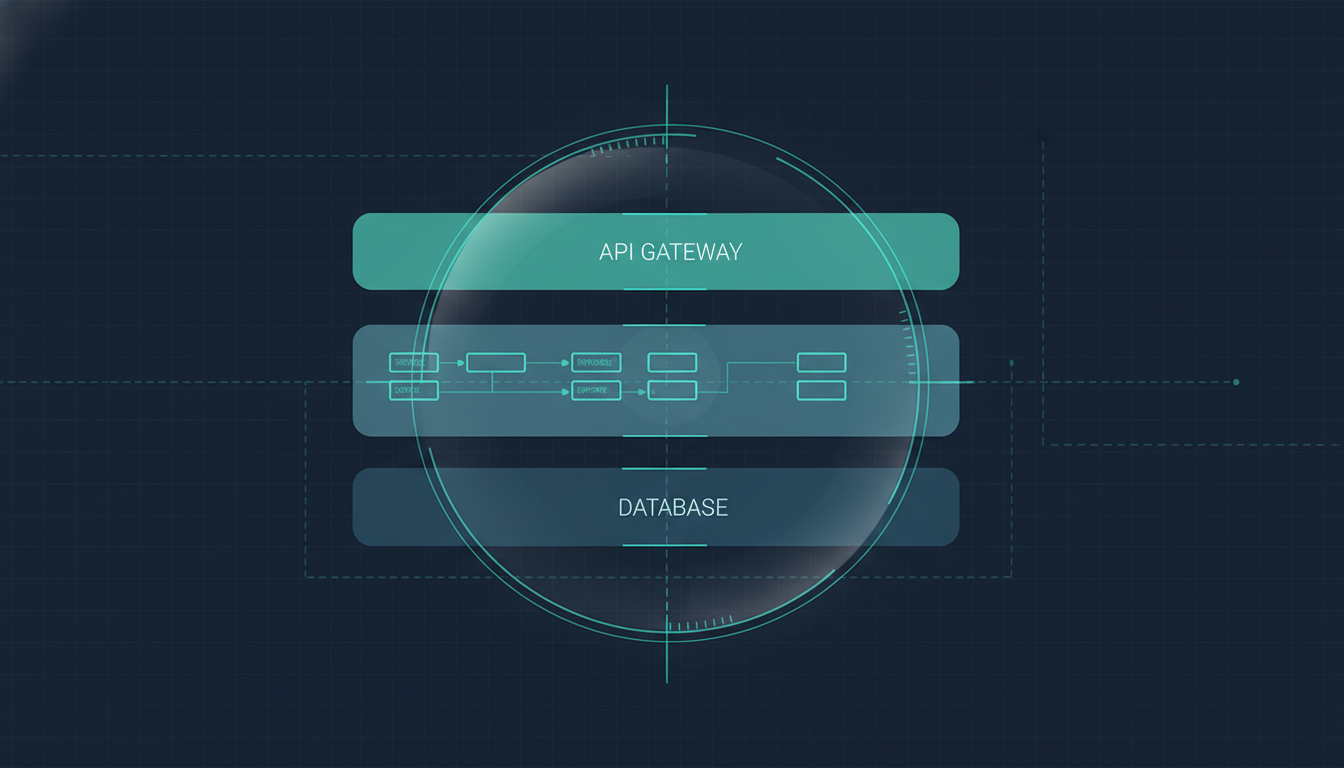
The 10K User Wall
There's a pattern I see repeatedly with SaaS founders. The product launches, gains traction, reaches 1,000 paying users — and then things start breaking. Page loads slow down. Background jobs fail silently. Deployment takes hours instead of minutes. Features that used to take a week now take a month.
The founder's instinct is to hire more engineers. But adding developers to a poorly architected system doesn't make it faster — it makes it more complex and harder to change.
What you actually need is an architecture review.
What Is an Architecture Review?
An architecture review is a structured assessment of your system's design, code quality, infrastructure, and operational practices. It's not a code audit (though it includes code inspection). It's a holistic evaluation of whether your technical foundation can support your business goals for the next 12-24 months.
At Cure Consulting Group, our architecture reviews typically take 1-2 weeks and produce a prioritized action plan with specific recommendations, effort estimates, and expected impact.
The Seven Signs You Need a Review
1. Deploy Anxiety
If your team is afraid to deploy on Fridays — or any day — something is wrong. Healthy systems have:
- Automated test suites that catch regressions
- Feature flags that let you deploy without releasing
- Rollback procedures that take minutes, not hours
- Monitoring that tells you immediately when something breaks
If you're deploying through prayer and manual QA, your deployment pipeline needs attention.
2. The "Only Sarah Knows" Problem
Every team has institutional knowledge. But if critical systems are understood by only one person, you have a bus factor of 1. Warning signs:
- No documentation for deployment procedures
- Environment-specific configurations stored on someone's laptop
- Business rules encoded in uncommented code that nobody dares refactor
- Tribal knowledge required to debug production issues
3. Database Queries That Take Seconds
If your API endpoints take more than 200ms to respond, you likely have database issues:
- Missing indexes on frequently queried columns
- N+1 query patterns (fetching related records in loops instead of JOINs)
- No query caching for expensive read operations
- Unbounded queries that return entire tables when paginated results would suffice
At Ford, we reduced a critical dashboard's load time from 12 seconds to 400ms by adding three database indexes and restructuring two queries. The code change was 15 lines. The performance impact was transformative.
4. Monolith Growing Pains
Your codebase started as a clean monolith, and that was fine. But now:
- A change to the billing module requires retesting the reporting module
- The test suite takes 45 minutes to run
- Two feature teams can't merge their work without conflicts
- Dependencies between modules are circular and poorly defined
You don't necessarily need microservices (that's often overkill). But you probably need better module boundaries, dependency injection, and interface contracts between components.
5. Infrastructure Costs Growing Faster Than Revenue
Cloud costs should scale sub-linearly with user growth. If they're scaling linearly or worse, you likely have:
- Over-provisioned resources running 24/7 for occasional workloads
- No autoscaling (paying for peak capacity constantly)
- Inefficient data storage (storing processed data alongside raw data)
- Missing CDN for static assets (serving images from your API server)
6. Security as an Afterthought
Get insights like this in your inbox
Practical tips on AI, mobile & cloud — no spam.
If you can answer "yes" to any of these, you need a security review immediately:
- API keys or secrets stored in source code
- No rate limiting on authentication endpoints
- SQL queries built with string concatenation
- User permissions checked on the frontend but not the backend
- No audit log for sensitive operations
7. No Observability
If you find out about production issues from customer complaints instead of monitoring alerts, your observability is broken. You need:
- Application performance monitoring (APM) for response time tracking
- Error tracking with stack traces and user context
- Business metric dashboards (sign-ups, conversions, churn)
- Alerting rules that page the right person at 3 AM
What We Look for in a Review
Our architecture review process examines five layers:
Layer 1: Code Quality
- Is the codebase organized with clear module boundaries?
- Are there automated tests, and do they test the right things?
- Is the code readable by someone who didn't write it?
- Are dependencies up to date, and are there known vulnerabilities?
Layer 2: Data Architecture
- Is the data model normalized appropriately (not over-normalized, not under-normalized)?
- Are there proper indexes for common query patterns?
- Is there a backup and recovery strategy that's been tested?
- How does the data model handle the projected 10x growth?
Layer 3: Infrastructure
- Is the infrastructure defined as code (Terraform, CloudFormation, Pulumi)?
- Are there separate environments for development, staging, and production?
- Is autoscaling configured and tested?
- Are secrets managed properly (not in environment files committed to git)?
Layer 4: Security
- Authentication and authorization patterns
- Data encryption at rest and in transit
- Input validation and sanitization
- Dependency vulnerability scanning
Layer 5: Operational Readiness
- Deployment pipeline and rollback procedures
- Monitoring, logging, and alerting
- Incident response playbooks
- On-call rotation and escalation policies
The Deliverable
Our review produces a prioritized action plan, not a 100-page document nobody reads. Each finding includes:
- The problem: What we found and why it matters
- The risk: What happens if you don't fix it (with probability and impact)
- The fix: Specific, actionable recommendation
- The effort: Engineering hours estimated
- The priority: Critical / High / Medium / Low
We typically identify 15-25 findings, of which 3-5 are critical (fix within 30 days) and 5-8 are high priority (fix within 90 days).
The ROI of Proactive Reviews
Architecture reviews are cheap insurance. A 1-2 week review costing $10K-$20K routinely prevents:
- $50K-$150K in emergency rewrites when the system hits scaling limits
- $30K-$80K in security incident response when a preventable breach occurs
- $20K-$40K in lost revenue from downtime during traffic spikes
- 3-6 months of engineering velocity recovered by removing architectural bottlenecks
The best time for an architecture review is before you need one. The second-best time is now.
Worried about your platform's architecture? Book a free initial assessment — we'll spend 30 minutes understanding your system and tell you whether a full review is warranted.
Written by
Rashad Cureton
Founder & Principal Engineer
Rashad is the founder of Cure Consulting Group. Previously an engineer at JP Morgan, Ford, Clear, NYT, Kickstarter, and Big Nerd Ranch. He builds full-stack web and mobile apps for startups and companies of every size.
Related Articles
Mobile App Development: Native vs Cross-Platform in 2026
The native vs. cross-platform debate has shifted dramatically. KMP, Flutter, and React Native have all matured — but 'it depends' isn't useful advice. Here's a concrete decision matrix.
10 min

Building Bilingual Apps: Our Approach to EN/ES Localization
Localization isn't just translating strings — it's rethinking your architecture, your UX, and your cultural assumptions. Here's how we build apps that feel native in both English and Spanish.
9 min

Firebase vs. AWS vs. Supabase: Choosing Your Backend in 2026
The backend decision shapes everything downstream — cost, speed, scalability, and team productivity. Here's how we evaluate Firebase, AWS, and Supabase for real client projects.
10 min