From Idea to MVP in 6 Weeks: Our Sprint Process Explained
Rashad Cureton
Founder, Cure Consulting Group
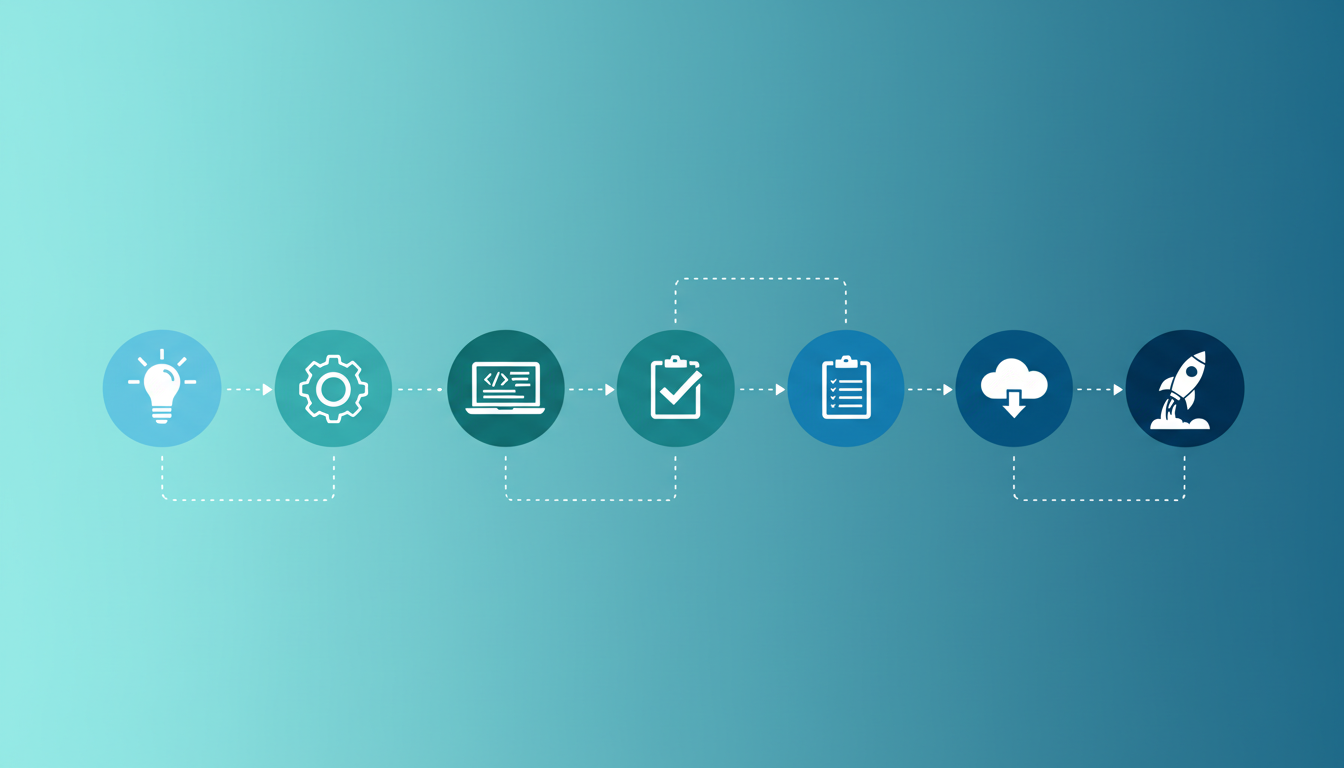
The MVP Paradox
Every founder wants to launch fast. Every engineer wants to build right. These goals feel contradictory, but they're not — if you have a disciplined process.
Our Sprint tier at Cure Consulting Group exists to solve this exact tension. We've refined it across dozens of engagements, from LaxID's sports analytics platform to SpedUp's SPED tutoring marketplace. The result is a repeatable 6-week process that consistently delivers working products.
Here's exactly what happens during each week.
Week 0: Discovery Sprint (Pre-Build)
Before the 6-week clock starts, we invest 3-5 days in discovery. This is often the most valuable phase of the entire engagement.
What we do:
- Problem interview: Not "what do you want to build?" but "what problem are you solving, for whom, and how do they solve it today?"
- User journey mapping: Walk through the core workflow from the user's perspective. Where are the friction points? What's the minimum path to value?
- Technical architecture decision: Choose the stack, backend platform, deployment strategy. For most Sprint projects, this is React Native or native (Kotlin/Swift) + Firebase.
- Scope definition: The hardest conversation. We list every feature the founder wants, then ruthlessly cut until we're left with 3-5 features that prove the core value proposition.
- Deliverable: A one-page scope document with user stories, wireframes, technical decisions, and a week-by-week milestone plan.
Why this matters: 80% of failed MVPs fail because of scope, not execution. Discovery is where we prevent that.
Week 1: Foundation
Goal: Working infrastructure, navigation, and authentication.
By Friday of Week 1, you can install the app (or visit the URL), create an account, log in, and navigate between empty screens. It doesn't do anything useful yet, but the skeleton is real.
Deliverables:
- Project repository with CI/CD pipeline
- Authentication flow (email + social login)
- Navigation structure with all core screens (placeholder UI)
- Backend infrastructure (Firebase project, Firestore schema, Cloud Functions scaffold)
- Design system foundation (typography, colors, spacing, core components)
Why we start here: Everything else builds on this foundation. Getting it right in Week 1 prevents cascading delays later.
Week 2-3: Core Feature Build
Goal: The primary value proposition works end-to-end.
This is where the product comes alive. We focus exclusively on the single most important workflow — the thing that makes someone download your app or visit your site.
For LaxID, this was: a coach can upload a game film and see player stats extracted automatically. For Vendly, this was: a vendor can list inventory items and customers can browse and purchase. For SpedUp, this was: a parent can find and book a SPED tutor based on their child's needs.
What we deliver:
- Complete UI for the core workflow (3-5 screens)
- Backend data model and API endpoints
- Real data flowing through the system
- Basic error handling and loading states
What we deliberately skip:
- Edge cases (we'll handle them in Week 4)
- Polish and animation
- Secondary features
- Admin dashboards
Daily standups: 15-minute async video updates. You see progress every day, and we catch misalignment before it costs a full sprint.
Week 4: Secondary Features and Edge Cases
Goal: The product handles real-world conditions.
Week 4 is where good MVPs separate from demo-ware. We add:
- Error states: What happens when the network drops? When the user enters invalid data? When the server returns an error?
- Empty states: First-time users see a helpful onboarding flow, not a blank screen.
- Secondary features: The 2-3 features that support the core workflow. For a marketplace, this might be search filters and a favorites list.
- Offline handling: Especially critical for LATAM-facing apps. Vendly's offline-first architecture was essential because vendors operate in markets with unreliable connectivity.
Get insights like this in your inbox
Practical tips on AI, mobile & cloud — no spam.
Week 5: Polish, Testing, and Iteration
Goal: The product feels professional and reliable.
This is where we close the gap between "it works" and "I'd pay for this."
Activities:
- UI polish: Animations, transitions, typography refinement, responsive adjustments
- Testing: Unit tests for business logic, integration tests for API flows, manual QA across devices
- Performance optimization: Image loading, list rendering, API response caching
- Client review cycle: You use the product for a full day and provide feedback. We address critical issues same-day.
- Analytics integration: Basic event tracking so you can measure engagement from day one
Week 6: Launch Preparation and Deployment
Goal: The product is live and accessible to real users.
For mobile apps:
- App Store / Google Play submission (we handle the listing, screenshots, and metadata)
- TestFlight / Internal Testing track for final client approval
- Production backend deployment with monitoring
- Crash reporting and error tracking (Firebase Crashlytics)
For web apps:
- Production deployment (Vercel, Firebase Hosting, or AWS)
- SSL, CDN, and domain configuration
- SEO basics (meta tags, sitemap, robots.txt)
- Performance audit (target: Lighthouse score 90+)
Handoff deliverables:
- Source code repository with documentation
- Architecture decision records
- Deployment runbook
- 30-day post-launch support plan
What Makes a Sprint Succeed (or Fail)
After running dozens of Sprints, the pattern is clear:
Sprints succeed when:
- The founder can articulate the problem in one sentence
- Scope is cut to 3-5 features maximum
- The client is responsive (< 4 hour turnaround on questions)
- We solve a real problem for a specific user, not a theoretical problem for everyone
Sprints fail when:
- "Just one more feature" creeps in every week
- The decision-maker isn't available for reviews
- The problem being solved is unclear or shifts mid-build
- The client is optimizing for completeness instead of learning
Real Numbers
| Metric | Our Average |
|---|---|
| Time to working prototype | 10 business days |
| Features shipped per Sprint | 4-6 core features |
| Post-launch critical bugs | 2-3 (fixed within 48 hours) |
| Client satisfaction (NPS) | 78 |
| Sprints that lead to Build engagement | 65% |
Is a Sprint Right for You?
A Sprint is the right choice if:
- You have a clear problem and a hypothesis about the solution
- You need to validate with real users before committing six figures
- You can dedicate 5-10 hours per week to the project during the 6 weeks
- Your budget is $15K-$40K
A Sprint is NOT right if:
- You need a full platform with multiple user types (that's our Build or Platform tier)
- Your requirements are still fuzzy (start with a paid discovery engagement instead)
- You can't be responsive during the build — our speed depends on fast feedback loops
Ready to turn your idea into a working product? Book a Sprint consultation — we'll tell you honestly whether your project fits the Sprint model, and if it doesn't, what approach would work better.
Written by
Rashad Cureton
Founder & Principal Engineer
Rashad is the founder of Cure Consulting Group. Previously an engineer at JP Morgan, Ford, Clear, NYT, Kickstarter, and Big Nerd Ranch. He builds full-stack web and mobile apps for startups and companies of every size.
Related Articles

Architecture Review: What It Is and Why It Matters
An architecture review isn't a sales pitch disguised as a meeting. It's 30 minutes where a senior engineer looks at your system and tells you what's working, what's risky, and what to do next.
5 min
Mobile App Development: Native vs Cross-Platform in 2026
The native vs. cross-platform debate has shifted dramatically. KMP, Flutter, and React Native have all matured — but 'it depends' isn't useful advice. Here's a concrete decision matrix.
10 min

The Real Cost of Technical Debt: A CFO's Guide
Technical debt isn't just an engineering problem — it's a financial one. Here's how to quantify it, communicate it to the board, and decide when paying it down makes business sense.
10 min