What Does Custom Software Actually Cost? A Transparent Breakdown
Rashad Cureton
Founder, Cure Consulting Group
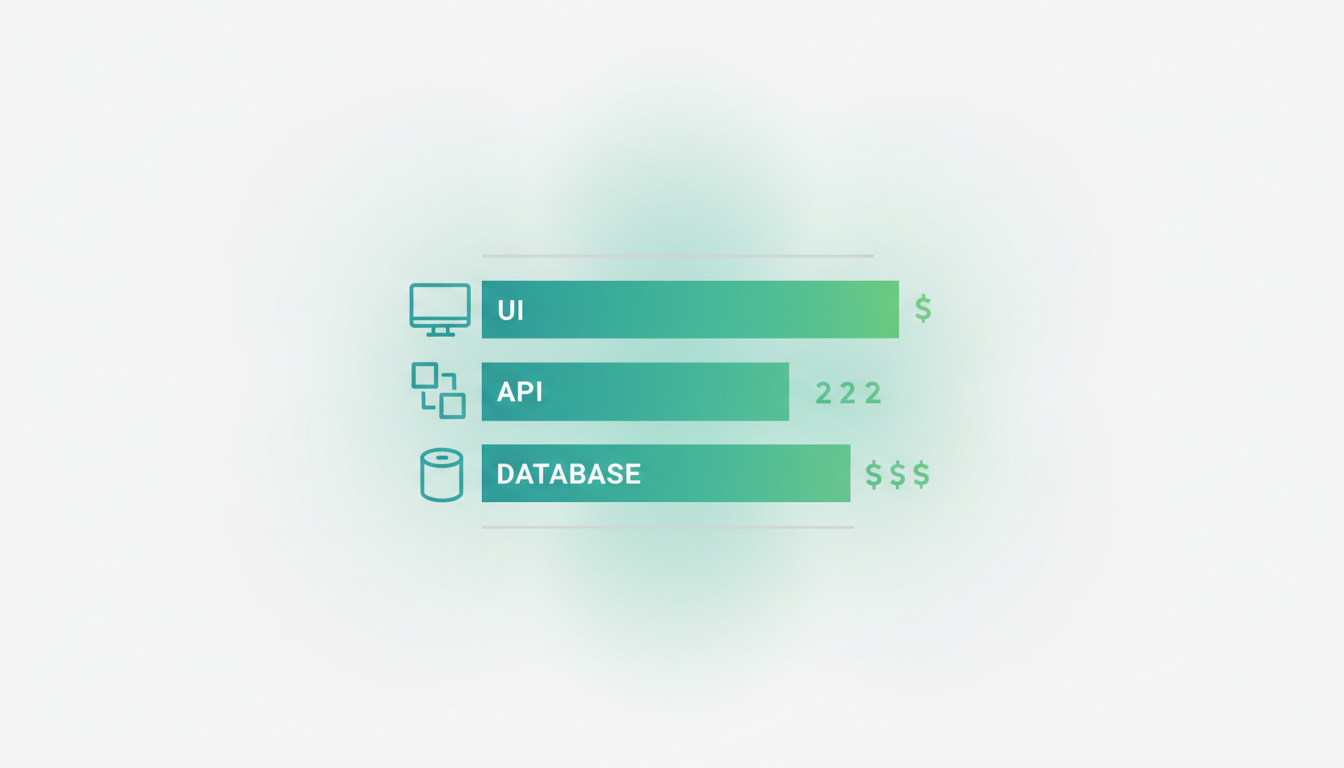
The Question Everyone Asks First
"How much will it cost to build my app?"
If a development agency answers this question on the first call without asking you a dozen questions first, hang up. They're either going to underbid and hit you with change orders, or they're padding so heavily you'll overpay by 40%.
Here's what I can tell you: custom software costs what it costs because of specific, quantifiable factors. Let me break them down transparently.
The Four Cost Tiers
At Cure Consulting Group, we've structured our services into tiers that reflect real project complexity. These aren't arbitrary — they map to engineering effort, risk profile, and timeline.
Sprint Tier: $15K-$40K | 4-6 Weeks
What you get: A focused MVP or single-feature product.
This is where most startups should begin. You're validating one core hypothesis with real users. We scope ruthlessly, build the critical path, and ship.
Typical Sprint projects:
- Single-platform mobile app with 3-5 core screens
- Web application with authentication, one core workflow, and a dashboard
- Internal tool that replaces a manual process
What drives cost within this tier:
- Platform count (one vs. two)
- Third-party integrations (payment processing, APIs)
- Authentication complexity (social login, SSO, role-based access)
Real example: When we scoped LaxID's initial lacrosse analytics MVP, we kept it to one platform, three key features, and Firebase backend. That kept us at the lower end of Sprint pricing while delivering enough to validate product-market fit.
Build Tier: $40K-$100K | 2-4 Months
What you get: A production-ready application with multiple features, polished UI, and infrastructure for growth.
Typical Build projects:
- Multi-platform mobile app with backend API
- SaaS platform with user management, billing, and core workflow
- E-commerce platform with custom business logic
What drives cost within this tier:
- Number of user roles and permission levels
- Data complexity (reporting, analytics, export)
- Offline functionality (adds significant engineering effort)
- Bilingual support (EN/ES localization adds 15-20% to frontend effort)
Platform Tier: $100K-$250K | 4-8 Months
What you get: A full platform with multiple user types, complex business logic, integrations, and scale-ready architecture.
Real example: The Initiated's basketball recruiting intelligence platform sits in this tier — multiple user types (scouts, coaches, athletes, parents), real-time data aggregation, video analysis integration, and a recommendation engine.
Enterprise Tier: $250K+ | 6-12+ Months
What you get: Mission-critical systems with compliance requirements, complex integrations, and high-availability architecture.
What Actually Drives Costs Up
1. Scope Ambiguity (+20-50%)
"We'll figure out the details as we go" is the most expensive sentence in software development. A proper discovery sprint costs $5K-$10K but routinely saves $30K-$50K in avoided rework.Get insights like this in your inbox
Practical tips on AI, mobile & cloud — no spam.
2. Platform Multiplication (+40-70%)
Building for iOS and Android separately nearly doubles frontend effort. This is where Kotlin Multiplatform saves significant budget — we've seen 30-40% code sharing on projects like SpedUp's tutoring platform.3. Custom Integrations (+$5K-$20K each)
Every third-party integration (Stripe, Twilio, Salesforce) adds development, testing, and maintenance overhead.4. Compliance Requirements (+15-30%)
HIPAA, SOC 2, PCI DSS, GDPR — each adds engineering constraints, documentation, and audit preparation.5. Real-Time Features (+15-25%)
Chat, live updates, collaborative editing — anything requiring WebSocket connections adds architectural complexity.What Keeps Costs Down
- Start with one platform. Launch where your users are. Expand later.
- Use proven infrastructure. Firebase, Supabase, or AWS Amplify handle 80% of backend needs at a fraction of custom backend cost.
- Invest in discovery. A $5K discovery sprint that catches a bad assumption saves $50K in rework.
- Prioritize ruthlessly. Ship the three features that matter. The other twelve can wait.
- Plan for phases. A $100K product delivered in three $35K phases is easier to budget and lower risk.
The Hidden Costs Nobody Mentions
Your build cost is not your total cost. Budget for:
| Hidden Cost | Annual Estimate |
|---|---|
| Cloud infrastructure | $200-$2,000/month |
| Third-party API fees | $100-$1,000/month |
| App store fees | $100-$200/year |
| SSL certificates and domains | $100-$500/year |
| Monitoring and error tracking | $50-$300/month |
| Ongoing maintenance and updates | 15-20% of build cost/year |
How to Budget Realistically
My recommendation for first-time app builders:
- Define your ceiling. What's the maximum you can invest before seeing revenue or validation?
- Work backward from there. Tell your development partner your budget. A good partner will tell you what's achievable within it.
- Reserve 20% for surprises. Every project has unknowns. If your budget is $50K, plan features for $40K.
- Factor in post-launch. Budget at least 6 months of maintenance and hosting from day one.
The Bottom Line
Custom software is an investment, not an expense. The question isn't "how much does it cost?" but "what return will this investment generate?"
A $40K MVP that validates a $2M market opportunity is cheap. A $15K app that nobody uses is infinitely expensive.
Ready to scope your project? Book a free discovery call — I'll give you an honest estimate and tell you if your budget matches your ambitions.
Written by
Rashad Cureton
Founder & Principal Engineer
Rashad is the founder of Cure Consulting Group. Previously an engineer at JP Morgan, Ford, Clear, NYT, Kickstarter, and Big Nerd Ranch. He builds full-stack web and mobile apps for startups and companies of every size.
Related Articles
The Real Cost of Technical Debt: A CFO's Guide
Technical debt isn't just an engineering problem — it's a financial one. Here's how to quantify it, communicate it to the board, and decide when paying it down makes business sense.
10 min

How to Choose a Development Partner: The Decision Framework
Hiring the wrong dev shop costs more than money — it costs you months you can't get back. Here's the framework I use to evaluate agencies, and the red flags I've learned to spot early.
9 min

When to Hire a Consulting Firm vs. Build In-House
Both options have tradeoffs. Here's an honest framework from someone who's been on both sides — as a consultant and as an in-house engineer.
7 min